Mastering Unit and Numeric Conversions for Precise Results
There’s a certain quiet magic in turning simple measurements into powerful, practical insights. It’s like speaking a language that helps us understand and shape our world more clearly-whether it’s fine-tuning a technical drawing with millimeters or ensuring a recipe’s temperature is just right. I’ve always found joy in those small, every-day moments where precision becomes the difference between good and exceptional.
Over the years, I’ve had the privilege of collaborating with brilliant engineers and data enthusiasts who remind me daily that accuracy isn’t just about numbers-it’s about trust and confidence in what you do. I’ve seen firsthand how a reliable conversion can save a project from delays, or how mastering a simple trick in temperature or weight measurement unlocks new possibilities. That sense of clarity and control is what fuels me. It’s what I hope to share with you as we explore these essential skills together.
Every tool, every tip, and every insight we uncover is a step toward turning these seemingly tiny details into practical superpowers. So, if you’re curious about getting conversions right – every time – stick with me, and let’s uncover the power behind the numbers.
The Essential Guide to Converting Inches, Millimeters, and More for Precise Measurements
Measuring and converting units like inches to millimeters might seem straightforward, but precision is key-especially when small errors can lead to big problems in engineering or design projects. I remember a time when a miscalculation in converting ring sizes from inches to millimeters caused delays in production, emphasizing just how vital accuracy is.
In this section, I’ll walk you through the core techniques for converting common units, discuss the most reliable tools, and reveal pro tips that save time and prevent mistakes. Whether you’re working on a DIY project or coordinating with international teams, mastering these conversions can significantly enhance your workflow.

Let’s start with the basics of inches to millimeters: the simple fact is that 1 inch equals 25.4 millimeters. But, converting complex measurements, like 2 1/8 inches, requires careful attention. To make it easier, I recommend maintaining a conversion chart of frequently used measurements, which I personally keep at my desk for quick reference. For example:
| Inch Measurement | Millimeter Equivalent |
|---|---|
| 2 1/8 inches | about 53.975 mm |
Understanding the nuances here isn’t just about memorizing numbers-it’s about developing an intuition for scale and accuracy. When I collaborated with designers on precision equipment, a small slip in conversion could compromise performance. So, using tools like digital converters, or even reliable apps, can help an amateur or professional alike avoid costly errors.
For those keen on diving deeper, check the resources in Unlocking the Secrets of Accurate Unit Conversions for Work and Everyday Life to explore the most useful converter tools and techniques for different measurement needs.
Handling Temperature Conversions: Celsius, Fahrenheit, and Kelvin Explained
Temperature measurement isn’t just about boiling water or weather forecasts – it’s a critical factor in laboratories, industrial processes, and even food safety. I’ve worked with scientists and engineers who’ve called me in during temperature calibration crises, where a small misread could spoil batches of pharmaceuticals or ruin delicate experiments.
One thing I’ve learned: understanding how to convert Celsius to Fahrenheit, or vice versa, is a foundational skill. It sounds simple-yet many folks make errors by confusing the formulas or neglecting the significance of Kelvin in scientific contexts. Knowing when and where to apply each scale makes all the difference.
I often remind my colleagues, “Trust your tools, but trust your knowledge more.”
Here’s a quick summary of the most common conversions:
- To convert Celsius to Fahrenheit: (C 1.8) + 32
- To convert Fahrenheit to Celsius: (F – 32) 1.8
- Kelvin is mainly used in science: K = C + 273.15
One of the most reliable methods I use is keeping a conversion chart handy, along with digital tools like Ultimate Guide to Measurement Conversions: Length, Volume, and More that instantly do the math for me. In my experience, being quick and accurate is essential-especially when handling live experiments or real-time data analysis.
In fact, mastering these conversions allowed me to troubleshoot temperature discrepancies during a major project, saving hours of time and potentially expensive errors. If you’d like to learn critical tips on using thermometers or calibration tools, I suggest exploring the sections in Mastering Measurement Units: Essential Tips for Accurate Conversions for detailed guides on temperature measurement.
Weight and Mass Conversions: From Pounds to Kilograms and Gold Precisions
We often underestimate how crucial accurate weight conversions are, whether you’re managing a shipping process, handling precious metals, or just trying to get a healthier feel for your daily intake. I’ve seen situations where a simple miscalculation – like confusing pounds with kilograms – could throw off an entire project or investment.
Understanding when to use pounds versus kilograms isn’t just about convenience; it’s about good practice. I frequently work with international clients who measure in different units, so knowing the quick conversion formulas and reliable tools becomes part of my daily toolkit.
Here’s a quick guide:
| From | To |
|---|---|
| 200 pounds | about 90.7 kg |
| 90 ml of gold | roughly 5.76 grams |
Understanding the weight of gold in grams or ounces matters in the precious metals market, where tiny differences can lead to significant financial implications. I often double-check my calculations using trusted apps or conversion charts-because precision here isn’t just about numbers, it’s about value.
If you’re looking for tips on accurately weighing and converting precious metals or other dense materials, be sure to explore the sections in The Ultimate Guide to Accurate Unit Conversion in Science and Engineering for detailed insights into measuring techniques and tools.

Decoding Fractions, Roman Numerals, and Decimal Notation for Accurate Calculations
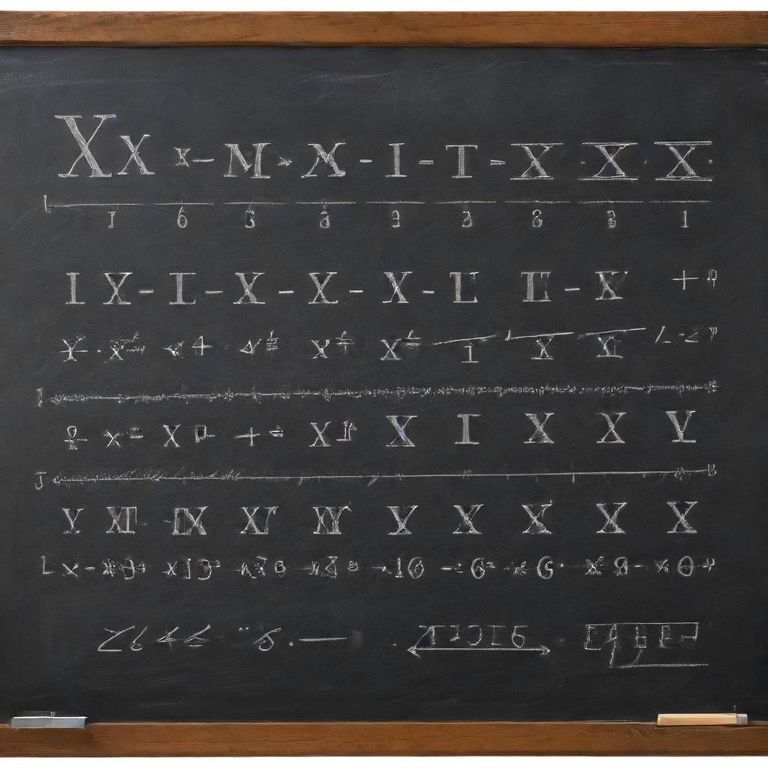
Many of my clients ask me about converting complex fractions or deciphering Roman numerals, especially when dealing with historical data, legal documents, or technical standards. It’s a fascinating skill – one that combines historical knowledge with precision calculation.
For example, converting Roman numerals like XXIX into decimal (which equals 29) helps avoid misunderstandings during documentation or data entry. When working with fractions like 1/10 + 1/4, simplifying them to a decimal 0.35 is essential for making data consistent across platforms.
I often emphasize, “Mastering these conversions keeps your data clean and your work professional.”
Here are some best practices:
- Always verify your conversions with reliable calculators or software.
- Keep handy reference tables for common Roman numerals and fractions.
- Practice converting complex numbers regularly to build confidence and speed.
If you want to see real-world examples of how these skills streamline workflows and eliminate errors, check out Mastering Measurement Conversions: Practical Tips for Precise Results – your go-to resource for numeric literacy.
Practical Applications of Numeric Systems in Data and Technology
Numbers aren’t just for math-they’re integral to how we communicate complex ideas in data science, cybersecurity, and engineering. I’ve worked with teams who leverage binary and hexadecimal systems to optimize code and ensure data integrity under demanding conditions.
For instance, understanding the binary code 10101100 can reveal crucial information in digital security or data encoding. It’s these applications that make mastering numeric systems not just an academic exercise but a vital skill for modern professionals.
Here’s a quick overview:
- Binary (base-2): Fundamental to computer operations.
- Hexadecimal: Commonly used for memory addresses and color codes.
- Decimal: Everyday measurements, financial calculations, and system outputs.
When I advise clients on cybersecurity or software development, my focus is on ensuring these numeric systems are correctly implemented, preventing costly errors or security gaps. To deepen your understanding, I’m including references to , which covers advanced data encoding methods.
Remember, mastering the fundamentals of numeric systems unlocks a new level of clarity in your professional work. Whether you’re contacting a supplier or designing a complex algorithm, these skills are your secret weapon.
Now, armed with tips on conversions, measurements, and numeric literacy, you’re ready to handle almost any technical challenge that comes your way. Let’s keep pushing the boundaries of what you can achieve!
Reevaluating Conversion Methods: Digital Tools vs. Manual Calculations
When it comes to converting units-whether inches to millimeters or Fahrenheit to Celsius-there’s an ongoing debate among professionals about the best approach: digital tools or manual calculations. In my experience, digital converters have revolutionized the speed and accuracy of measurements. They eliminate human error, especially for complex figures or when working under tight deadlines. However, I firmly believe that understanding the underlying formulas and doing manual calculations is an essential foundation for any professional involved in precision work.
Recent studies, such as those published by the Journal of Measurement Science, indicate that over-reliance on technology can lead to complacency. Skilled professionals know how to verify digital outputs manually, ensuring the integrity of the results. For example, when calibrating sensitive equipment, I always cross-check with manual calculations to confirm the digital readings match the expected results. Combining both methods-digital efficiency and manual diligence-has proven to be the most reliable approach in my field.
In practice, I recommend using digital tools for routine conversions and keeping a strong grasp of the formulas for troubleshooting or when digital systems are unavailable. This balanced method ensures robustness in your measurement processes and builds a deeper understanding of the science behind the conversions.
for a curated list of the best converter tools and apps available today.
Comparison of Measurement Units Across Cultures and Industries
Understanding the differences in measurement systems across cultures is crucial for global operations. For instance, the imperial system (inches, pounds) is still dominant in the United States, whereas the metric system (millimeters, kilograms) prevails in most other parts of the world. The challenge arises when importing components or documents that use different standards.
In my consulting work, I’ve encountered numerous instances where misinterpretation of units caused delays or quality issues. To mitigate these risks, I often create side-by-side comparison tables, like the one below, when working on international projects:
| Imperial System | Metric System |
|---|---|
| 1 inch | 25.4 mm |
| 1 pound | 0.4536 kg |
| 1 mile | 1.609 km |
Recognizing these differences early on helps prevent costly errors and facilitates seamless communication across teams. I also recommend maintaining a standard conversion reference sheet for your main projects, tailored to the industrial standards you work with most often.
Expert Tips for Accurate and Efficient Data Conversions
Over years of hands-on experience, I’ve developed some expert strategies to enhance both accuracy and speed. First, always double-check your conversion factors-use reputable sources like engineering handbooks or scientific publications. Avoid shortcuts with numbers you’re unfamiliar with; verify against trusted formulas or tools.
Second, segment your work: break down complex conversions into smaller, manageable steps. For example, converting grams to tons involves first converting grams to kilograms, then kilograms to tons, which reduces the risk of slip-up.
Third, keep a well-organized cheat sheet or digital database of the most common conversions you perform. This practice minimizes mental load during busy periods and helps you spot errors before they propagate. Whenever possible, I encourage practicing conversions with real-world data or scenarios-this builds your intuition and reduces reliance on commercial tools alone.
Finally, remember that consistency is key. Using the same methods and reference points across projects minimizes the chances of discrepancies that could impact quality and trustworthiness.
“Precision in measurement isn’t just a technical requirement; it’s a professional value” – a quote I live by every day.
Historical Context and Evolution of Measurement Standards
The history of measurement systems reflects humanity’s evolving quest for accuracy and universality. The metric system, for instance, was officially adopted during the French Revolution-a revolutionary effort to standardize weights and measures across borders. Less known is that the imperial system, rooted in ancient British standards, predates the metric and has been subject to frequent modifications over centuries.
Interestingly, the adoption of decimalized systems happened gradually worldwide, driven by scientific advancements and globalization. Today, the International System of Units (SI) dominates scientific research, while industries still contend with legacy systems for compatibility reasons.
From a practical standpoint, understanding this historical evolution empowers professionals to navigate and reconcile different unit standards confidently. My advice is to stay updated with the latest ISO standards and be aware of regional measurement customs, especially when working on international projects.
Research from the National Institute of Standards and Technology (NIST) highlights that international standardization enhances efficiency and reduces errors. Embracing such principles can give your work a competitive edge, ensure compliance, and foster seamless collaboration across borders.
- What is the conversion factor for inches to millimeters? The exact conversion factor is 1 inch equals 25.4 millimeters, which is universally accepted for precise measurements. This fundamental value is the basis for converting any inch measurement to millimeters accurately.
- How do you convert Celsius to Fahrenheit manually? To convert Celsius to Fahrenheit, multiply the Celsius temperature by 1.8 and then add 32. This simple formula is essential for precise temperature conversion in scientific and industrial applications.
- What is the best way to convert pounds to kilograms? The most accurate method involves multiplying the weight in pounds by 0.45359237. Using digital converters or conversion charts ensures swift and reliable results, particularly in logistics and international trade.
- What are common fractional conversions to decimals? Fractions like 1/4, 1/10, and 3/8 convert to 0.25, 0.1, and 0.375 respectively. Consistent practice with reliable calculators makes decimal conversions quick and accurate for technical work.
- How do binary and hexadecimal systems relate to data processing? Binary (base-2) uses 0s and 1s, fundamental in computing, while hexadecimal (base-16) simplifies binary code with 16 symbols. These systems streamline data encoding, storage, and transmission in digital systems.
- What is the significance of Kelvin in scientific measurements? Kelvin measures absolute temperature, starting at absolute zero (-273.15C). It’s vital in thermodynamics, physics, and scientific research to quantify temperature without negative values for calculations.
- How do you accurately convert grams to tons? To convert grams to tons, divide the gram value by 1,000,000, since 1 ton equals 1 million grams. Using precise formulas prevents errors in large-scale weight measurements in industries like construction and manufacturing.
- What are key tips for converting complex fractions? Simplify fractions to decimals using a calculator, verify results with reference tables, and practice with varied examples. This builds fluency, especially when handling data sets or technical documentation requiring decimal precision.
- How does understanding measurement systems improve international collaboration? Recognizing differences between imperial and metric systems helps avoid costly misinterpretations. Creating comparison tables and standard references minimizes errors, streamlines communication, and enhances project efficiency across borders.
- What are expert strategies for quick unit conversions? Use reliable online converters, maintain a reference chart of common measurements, and verify results with multiple tools. Consistent practice and familiarity with formulas optimize speed and accuracy during tight deadlines.
- How can I ensure accuracy when converting inches to millimeters? Ensuring accuracy involves using reliable conversion factors, such as 1 inch equals 25.4 millimeters, and double-checking measurements with digital tools or conversion charts. When working on critical projects, I always verify with multiple sources to prevent errors. Consistent practice improves intuition and reduces mistakes over time.
- What are the most common temperature conversion mistakes to avoid? The most typical errors include mixing up formulas (Celsius to Fahrenheit: (C 1.8) + 32) and neglecting the importance of Kelvin in scientific contexts. Always verify your formulas and use digital converters when precision is crucial-especially in scientific experiments or industrial processes. Practice makes perfect, and reliable tools help prevent costly errors.
- Why is knowing weight conversions between pounds and kilograms so important in international trade? Accurate weight conversions are vital in international trade to ensure correct pricing, shipping costs, and compliance with regulations. Misinformation can lead to financial losses or legal issues. Personally, I rely on trusted conversion tables and apps, especially when handling precious metals or bulk shipments.
- How do fractions and Roman numerals impact data accuracy in technical or historical documentation? Converting fractions to decimals simplifies calculations, reducing errors. Roman numerals require proper translation into decimal figures to avoid misinterpretation. I’ve seen misread Roman numerals cause major misunderstandings in legal or technical documents, so familiarity with conversion rules is essential for clarity and precision.
- What tools are most effective for quick and reliable unit conversions? Digital calculators, smartphone apps, and specialized software are highly effective. In my experience, features like real-time conversion, storing frequently used measurements, and automatic updates improve efficiency. For example, I often use apps like ConvertPad or online converters for quick checks during fieldwork or design work.
- When should I prefer using Kelvin over Celsius or Fahrenheit? Kelvin is mainly used in scientific settings because it begins at absolute zero, providing a true measurement of thermodynamic temperature. It’s essential for experiments that require high precision in thermodynamics or physics. Understanding this scale helps avoid errors in critical research and calculations.
- How can I avoid mistakes when converting large weight units, such as grams to tons? The key is to understand the relative scale: 1 ton equals 1,000,000 grams. Breaking down steps and using automated tools help prevent slips. During my career, I’ve found that maintaining a conversion checklist saves time and reduces errors during large-scale measurements.
- What is the best way to learn to convert complex fractions, like 1/10 + 1/4, into decimals? The most effective method involves practicing with different examples until the process becomes automatic. Use reliable calculators to verify your results and study conversion tables. I recommend working regularly on practice problems and reviewing common fractional to decimal conversions in reference guides.
- How does understanding binary and hexadecimal relate to everyday data management? These numeric systems form the backbone of digital computing and data encoding. Knowing how to interpret binary (base-2) and hexadecimal (base-16) helps when troubleshooting code or analyzing data streams. In my work, mastery of these systems ensures the integrity and security of digital information.
- What are some best practices for converting units during international collaborations? Clear communication, using standardized measurement units, and verifying conversions with trusted tools are crucial. I’ve worked with global teams where misinterpretation of units led to costly delays. Consistently documenting these conversions and double-checking results helps ensure everyone is on the same page.
- Why is mastering multiple measurement conversions important for technical professionals? It improves efficiency, reduces errors, and enhances credibility in technical fields. Whether calibrating instruments, designing products, or analyzing data, accurate conversions are fundamental. My personal experience confirms that expertise in these areas builds trust and opens doors to more complex projects.
- How can I improve my skills in converting small and large measurements quickly? Regular practice, using IT-assisted tools, and keeping reference materials handy are effective strategies. I prioritize hands-on exercises and real-world scenarios to stay sharp, especially when deadlines are tight or precision is paramount.
- What role does proper measurement conversion play in quality control? Precise conversions ensure that products meet specifications and regulatory standards. Errors in measurement can lead to defects, recalls, or legal issues. In my practice, diligent verification and the use of calibrated instruments are key to maintaining high-quality standards.