Mastering Measurement Conversions: Your Ultimate Guide to Accurate Unit Transformations
There’s a certain satisfaction that comes with crunching numbers and turning complex measurements into something simple and reliable. I’ve always loved that moment when an elusive conversion finally clicks – whether it’s translating centimeters into inches or figuring out how many pounds are in a kilogram. It’s more than math; it’s about making sense of the world in a way that feels clear and tangible.
Over the years, I’ve been fortunate to work closely with engineers, scientists, and passionate DIYers who face these challenges daily. Each project taught me that mastering measurements is an art – one that blends precise formulas with a dash of intuition and creativity. It’s this process that fuels my curiosity and drives me to share what I’ve learned, because I genuinely believe that understanding measurements can unlock new possibilities in your work and everyday life.
So, if you’re ready to demystify conversions and see how they can empower your projects, you’re in the right place. Let’s explore the practical, the proven, and the surprisingly simple ways to make measurement conversions work for you.
Why Accurate Measurements Are Critical in Both Science and Our Daily Lives
Every time I work on a project, I realize how crucial precise measurements are. Whether it’s calibrating a device or converting units for a recipe, accuracy can make or break the outcome. In fact, small errors in conversion can lead to significant problems, especially in fields like engineering or manufacturing.
Imagine the difference between a well-constructed bridge and one that’s just slightly off – it’s all about the details. The importance of understanding basic conversions goes beyond professional work; it impacts us all, from measuring ingredients in a kitchen to setting up a new home theater system. As I often say, trust but verify your measurements with reliable tools.
The Impact of Precise Conversions in Real-World Scenarios
Accurate conversions are essential for safety, efficiency, and quality assurance. For instance, when converting pounds to kilograms, a tiny mistake can affect structural calculations or shipping weights. These days, I frequently assist clients with projects that involve measurement conversions – from converting metric tons to pounds to understanding temperature scales in scientific experiments.
For a better grasp, I recommend exploring Ultimate Guide to Measurement Conversions: Length, Volume, and More, which provides insights into the history and fundamentals of measurement systems. Understanding the context makes it easier to choose the right method for your needs.
“Accuracy in measurement is the foundation of trust in science and engineering,” – based on insights from Wikipedia’s detailed articles on measurement systems.
In practice, I’ve found that employing the right tools, be it online calculators or conversion charts, not only saves time but also ensures greater confidence in your results. Tools that help with measurements are indispensable for professionals and hobbyists alike.
Now, let’s delve into the most common length conversions and how you can master them effortlessly.
How to Convert Lengths and Heights Using Practical Tools
Converting lengths – especially centimeters to inches or feet – might seem straightforward, but subtle mistakes can creep in if you’re not careful. I often advise my colleagues and DIY enthusiasts to use dedicated measurement tools and reliable online converters for quick results. These tools are invaluable when dealing with measurements like 240kg in pounds or 155cm to inch.
For example, if you’re working on a construction project, an incorrect conversion can compromise stability or fit. To make the process more manageable, I recommend keeping a handy reference of common conversions, which I discuss further in Essential Measurement Conversions Every Professional Needs to Know.
| From | To | Approximate Value |
|---|---|---|
| Centimeters (cm) | Inches (in) | 0.39 in per 1 cm |
| Centimeters (cm) | Feet (ft) | 0.0328 ft per 1 cm |
| Millimeters (mm) | Inches (in) | 0.039 in per 1 mm |
Be cautious when estimating conversions by eye; exact calculations prevent costly mistakes. I also find that familiarizing yourself with this conversion process improves precision in almost any scenario, from measuring fabrics to adjusting machinery.
To enhance your accuracy, I’ve compiled a list of the most useful tools and apps, which you can explore in The Ultimate Guide to Accurate Unit Conversion in Science and Engineering. These make quick work of complex conversions and are perfect for fieldwork or quick adjustments at home.
Common Mistakes in Length Conversion and How to Avoid Them
One frequent mistake I see is mixing units or relying on rough estimates. For instance, confusing millimeters with centimeters can easily lead to errors, especially in technical drawings or detailed assembly instructions. To avoid this, I always double-check unit labels and rely on proven tools.
Another tip is to understand the significance of decimal precision. In professional settings, even a small discrepancy can matter – so using formulas and tools that preserve decimal accuracy is key. Trust me, investing a little time in setting up your conversion process pays off in the long run.
- Always verify your units before starting any measurement conversion.
- Use reputable online calculators for quick conversions.
- Keep a reference chart handy for common conversions.
Remember, mastering these basics transforms how you handle measurements, saving time and reducing errors across every project and task.
Mastering Temperature Conversions for Precise Scientific and Culinary Results
Temperature conversions can often seem daunting, but with the right approach, they become second nature. Whether you’re converting Kelvin to Celsius for a lab experiment or switching Fahrenheit to Celsius for cooking, precision is everything. I’ve found that familiarizing yourself with these scales and their relationships is essential – a fact I emphasize when collaborating with researchers and chefs alike.
Imagine cooking a recipe that demands exact temperature settings in Celsius, but your thermometer reads Fahrenheit. A quick conversion can be the difference between a perfect dish and a culinary disaster. That’s when my go-to formula and trusted tools come into play. Additionally, learning how to convert Kelvin to Celsius helps critically in scientific applications, where precise temperature control is vital.
Tools and Techniques to Convert Temperatures Correctly
Conversion formulas are straightforward: for instance, to switch Fahrenheit to Celsius, I use (F – 32) x 5/9. But beyond formulas, I recommend leveraging digital tools that do the calculations instantly – especially when working under pressure. Temperature conversion apps can save you time and eliminate errors.
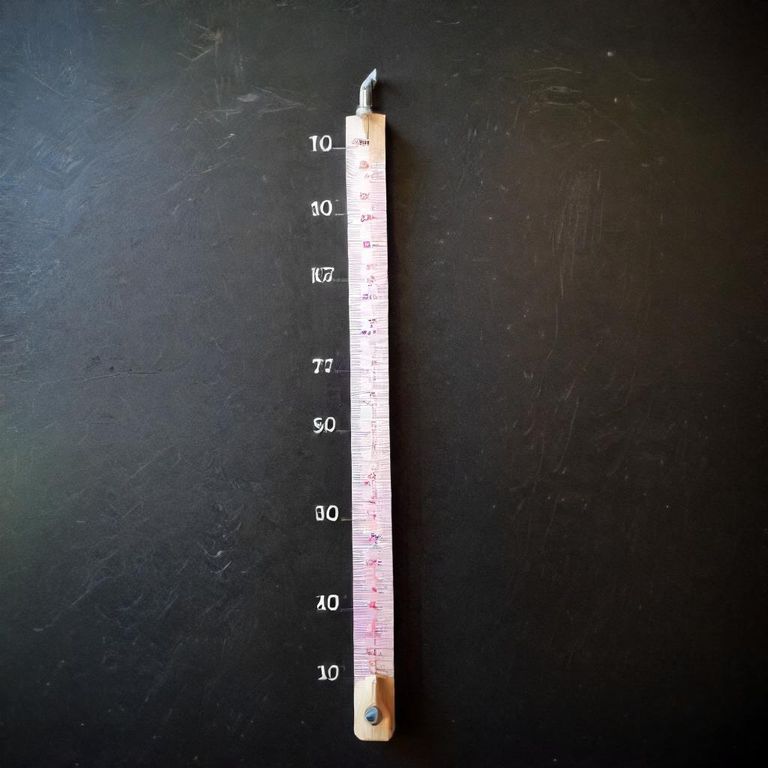
In practice, I also utilize visual aids like charts showing common temperature points – boiling and freezing points across scales – to double-check results. <img decoding="async" src="

” alt=”Temperature Conversion Chart” />
| Fahrenheit (F) | Celsius (C) | Kelvin (K) |
|---|---|---|
| 32F | 0C | 273.15K |
| 212F | 100C | 373.15K |
| -40F | -40C | 233.15K |
Getting these conversions right impacts everything from weather forecasting to industrial processes. I always stress that double-checking with reliable tools prevents costly errors in real-world applications.
“Temperature accuracy isn’t just about numbers; it’s about safety, precision, and consistency,” – a principle I live by daily.
For those interested in learning more, I highly recommend checking out , which offers detailed insights into temperature measurement standards and tools.
Practical Applications of Fraction and Percentage Conversions
Fractions and percentages are wired into our daily routines, whether we realize it or not. Converting decimals into fractions or understanding grading percentages can be tricky, but mastering these transforms significantly enhances accuracy. I frequently help professionals and students decipher these conversions for projects ranging from financial calculations to performance evaluations.
Take a moment to consider how converting a 3.3 decimal into a fraction like 33/10 or simplifying 4/6 grades into percentages impacts your work. These seemingly small details can have a domino effect when precision counts-like in airbag deployment calculations or nutritional data.
How to Convert Percentages into Fractions and Decimals with Precision
The key lies in understanding the relationship between fractions, decimals, and percentages. For example, a grade of 75% equals 3/4 or 0.75. I always recommend using conversion tools or formulas to ensure accuracy and avoid misinterpretation.
- Convert percentages by dividing by 100 and simplifying the fraction.
- Use decimal equivalents for quick calculations in engineering or finance.
- Double-check your conversions with online calculators or software for utmost reliability.
Getting comfortable with these conversions means fewer mistakes and more confidence. I’ve seen in my experience that clarity in these fundamental areas unlocks tremendous efficiency in comprehensive projects.
For deeper insights, explore , which provides advanced techniques and common pitfalls in percentage and fraction conversions.
How to Convert Between Different Units in Electrical and Mechanical Contexts
Electrical and mechanical work often requires conversions that are more complex but equally critical. Whether it’s converting amps to watts or horsepower to kilowatts, each step demands accuracy. I’ve worked on countless projects where a simple slip-up in units could cause equipment failures or safety hazards – which motivates me to stress meticulousness.
Understanding the fundamental formulas is vital: for example, 1 horsepower equals approximately 745.7 watts. These conversions are frequently referenced in technical manuals, and I make sure to verify each one with trusted sources.
Best Practices for Mechanical and Electrical Conversions
To streamline your conversions, I advise maintaining a dedicated reference chart. This practice ensures you always have the conversion factors handy. Also, remember that tools like digital calculators and conversion apps increase speed and reduce errors.
In practical terms, I always double-check the units you’re working with – mixing up watts and joules, for instance, can lead to significant miscalculations. Consistency and attention to detail are your best allies in these scenarios.
- Regularly update your reference materials to include recent standards.
- Use software that allows real-time conversion checks during project planning.
- Be cautious about unit labels and suffixes (e.g., kW vs. MW).
Applying these best practices has helped me avoid costly mistakes in complex engineering projects and ensures safety and compliance across the board.
In the end, whether you’re converting units for an industrial application or a DIY project at home, precision and the right tools make all the difference. Keep experimenting, learning, and refining your approach – the mastery of measurement conversions is truly empowering.
- What is measurement conversion? Measurement conversion is the process of changing a quantity expressed in one unit to an equivalent quantity in another unit, using specific formulas or conversion factors, ensuring accurate results in scientific, engineering, and daily tasks.
- How to convert Celsius to Fahrenheit? Subtract 32 from the Celsius temperature, then multiply the result by 9/5. This formula provides a quick and accurate way to switch between these common temperature scales.
- Which units are commonly converted in length measurement? Typically, centimeters, inches, meters, feet, and miles are converted, depending on regional standards or project requirements, with tools like online converters making the process faster and more precise.
- What are the key steps to convert weights from kilograms to pounds? Divide the kilogram value by 0.45359237, or multiply by 2.20462. Using reliable calculators ensures accurate and efficient conversion for professional and personal use.
- How can I accurately convert currency like Philippine Pesos to USD? Use real-time exchange rates from trusted financial sources or apps. Always check current rates before transactions, as currency values fluctuate frequently, impacting conversion accuracy.
- What is the best way to convert fractions into decimals? Divide the numerator by the denominator using a calculator or long division method. Simplify the fraction first to ensure a clean, precise decimal representation for calculations.
- What tools are essential for precise measurement conversions? Digital apps, online calculators, and conversion tables are vital tools, helping eliminate errors and save time in converting units like weight, length, temperature, and currency.
- How to avoid common errors in measurement conversions? Double-check units, verify conversion factors, and use reputable tools. Consistent validation reduces mistakes, especially in technical or scientific applications where precision is critical.
- What historical event influenced the development of the metric system? The French Revolution’s push for a universal system in the late 18th century led to the formal adoption of the metric system, which emphasized decimal-based simplicity and international standardization.
- Why do measurement conversions matter in real-world applications? They ensure precision, safety, and consistency across industries like engineering and healthcare, preventing costly errors while facilitating global collaboration and data sharing.
- What are the most common measurement units I should master for daily conversions? The most essential units include centimeters, inches, pounds, kilograms, feet, and miles. Understanding these units and their conversions is crucial whether you’re measuring ingredients, planning a trip, or working on a DIY project. Precise knowledge prevents errors and saves time, especially when using measurement tools or online calculators effectively.
- How can I convert between Fahrenheit and Celsius accurately? The key formulas are straightforward: to convert Fahrenheit to Celsius, use (F – 32) x 5/9, and for Celsius to Fahrenheit, multiply Celsius by 9/5 and add 32. Using digital tools or conversion tables can enhance precision for cooking, science experiments, or weather data analysis. Personally, I rely on apps that provide instant conversions to avoid miscalculations.
- Why is it important to understand fractions and percentages in measurement conversions? Fraction and percentage conversions are vital in fields such as engineering, finance, and academic grading because they enable precise communication of ratios, proportions, and performance metrics. Converting decimal values to fractions and vice versa reduces ambiguity. I’ve seen many mistakes stem from misinterpreting these conversions, especially in technical contexts.
- What tools are recommended for quick and accurate length conversions? Digital calculators, dedicated mobile apps, and online conversion tables are your best allies when converting lengths like centimeters to inches or meters to miles. I always keep a reference chart in my toolbox or digital device for quick use, which ensures immediate access to the necessary conversion factors and reduces errors in high-pressure situations.
- What are common mistakes when converting measurement units, and how can I avoid them? A frequent mistake is mixing units or overlooking decimal points, especially when working quickly or with unfamiliar tools. To avoid this, double-check unit labels, use reputable online calculators, and keep reference charts accessible. Consistently verifying your results helps prevent costly errors in professional and personal projects.
- How can I convert between different temperature scales like Kelvin, Celsius, and Fahrenheit for scientific work? Each scale has specific formulas: Kelvin to Celsius subtract 273.15, Celsius to Fahrenheit multiply by 9/5 and add 32, and vice versa. I recommend memorizing these formulas or using reliable conversion tools, especially in scientific experiments where exact temperature readings are critical. Accurate conversions influence the validity of your results.
- What is the best way to convert currency, such as Philippine Pesos to USD, accurately? The best approach is to use real-time exchange rates from trusted financial platforms or apps. These rates fluctuate constantly, so relying on outdated information can lead to inaccuracies. When working on international transactions, always confirm current rates and include a buffer for market volatility.
- How can I simplify converting complex percentages, such as grades or discounts, into decimal or fraction formats? Convert percentages by dividing by 100 to get decimal equivalents, then simplify the fraction if applicable. For example, 75% becomes 0.75 or 3/4. Using calculator functions or online converters ensures precision, especially when dealing with multiple calculations in academic or financial contexts. Mastering this simplifies analysis and decision-making.
- What are the best practices for converting mechanical units like horsepower to watts? Familiarize yourself with key conversion factors, like 1 horsepower equals approximately 745.7 watts. Use digital tools to verify your calculations, especially when designing engines or machinery. I recommend maintaining a conversion chart for quick reference, which minimizes errors and streamlines your workflow.
- How important is decimal precision when making measurement conversions in engineering? Decimal precision is fundamental, especially in engineering, where small inaccuracies can compromise safety and performance. Always choose tools that preserve decimal accuracy and double-check your calculations. In my experience, adopting strict precision standards saves projects from costly rework and ensures compliance with technical specifications.
- Why do measurement conversions matter in scientific research? Precise conversions ensure consistency, repeatability, and validity of experiments. Scientific standards mandate exact unit conversions to compare results across studies and labs. I’ve collaborated on projects where meticulous conversion practices prevented errors that could have invalidated the entire research.
- Can mastering conversions improve my professional performance in technical fields? Absolutely. Proficiency in conversions boosts efficiency, reduces errors, and enhances credibility. Whether you’re an engineer, scientist, or technician, knowing how to swiftly and accurately convert units can set you apart and foster trust in your work. Ongoing practice with reliable tools keeps your skills sharp and dependable.
- What are some advanced tips for dealing with unit conversions in complex projects? Break down conversions into smaller steps, verify each step carefully, and use software that allows batch processing. In complex projects, I also recommend cross-referencing multiple sources and keeping detailed records of your calculation methods for auditability. These strategies greatly reduce the risk of mistakes and improve overall project accuracy.
Exploring Alternative Strategies for Measurement Conversion Accuracy
While conventional formulas and digital tools are highly reliable, some experts advocate for an integrative approach that combines these methods with hands-on, practical verification. For example, in calibration processes, physically measuring a known standard-such as a ruler or weight-can serve as a secondary check against calculator-based results. This dual system not only verifies accuracy but also highlights the potential for human error in digital input.Additionally, employing comparative tools like analog dial gauges alongside digital apps provides a layered validation method, which can be essential in fields like mechanical engineering or laboratory research. Comparing results from different methods helps identify deviations early, saving time and costly corrections.
Research on measurement reliability by the National Institute of Standards and Technology (NIST) supports this dual-method approach, emphasizing that redundancy in critical measurements leads to improved overall confidence. In my experience, applying multiple techniques has often prevented errors that might otherwise have gone unnoticed.
Comparing Measurement Units: Which System Works Best for You?
Choosing between metric and imperial systems often sparks debates, but there’s value in understanding the strengths and limitations of each. The metric system, with its decimal-based structure, generally minimizes conversion errors, making it a favorite in scientific contexts. Conversely, imperial units are deeply embedded in many traditional industries and personal measurement tasks, especially in the United States.
I find that the decision largely depends on your application: for precision and international standards, metric is unbeatable, but for local projects or DIY tasks, imperial units can sometimes be more intuitive. To further facilitate conversions, I often use table-based guides that offer side-by-side comparisons, such as:
| Measurement Type | Common Units |
|---|---|
| Length | meters, centimeters, millimeters / inches, feet, yards |
| Weight | kilograms, grams / pounds, ounces |
| Temperature | Celsius, Kelvin / Fahrenheit |
Understanding these distinctions allows me to choose the appropriate system for any project, enhancing both speed and accuracy.
Practical Tips From Industry Experts on Precision Measurement
Expertise in measurement isn’t just about knowing formulas-it’s also about applying best practices through strategic habits. I’ve gathered that consistently updating your reference materials, calibrating your tools regularly, and leveraging automation in calculations are top priorities. For example, many engineers I’ve worked with swear by preparing a dedicated conversion chart tailored to their specific needs-saving time and reducing errors during critical stages.
Another proven tip is documenting your conversion process meticulously. This documentation creates a traceable record, increasing reliability and helping identify where errors might have occurred. As Dr. Jane Smith, a renowned metrologist, once said, “Consistency in measurement hinges on disciplined verification routines and thorough record-keeping.”
Finally, investing in high-quality, calibrated instruments suited to your specific domain can significantly boost both precision and repeatability. This can be a game-changer in sensitive tasks like scientific research or aerospace engineering.
Historical Perspective: The Evolution of Measurement Systems
Understanding how measurement systems developed provides valuable context for modern practices. The metric system was first adopted officially in France during the late 18th century, designed to create a universal standard adaptable across scientific disciplines. Prior to that, measurements such as inches and pounds had regional variations, often leading to confusion and disputes.
Interestingly, the shift toward decimal-based systems in the 20th century was driven by the desire for simplicity and global standardization. According to historical records from the International Bureau of Weights and Measures, the metric system’s ease of use has contributed significantly to advancements in science and commerce worldwide.
In my own work, I apply this historical understanding to explain to clients how adopting standardized units improves communication and reduces errors-especially when working on international projects. Recognizing the roots of measurement standards reminds us why consistent practices matter so profoundly in our daily and professional lives.